
Import your connections
1
Open the importer
File > Import from Other App…
2
Pick your current client
Navicat is the one exception: export first with File > Export Connections in Navicat, with Export Password turned on, then point TablePro at the
.ncx file.3
Review and import
Uncheck anything you don’t want, resolve duplicates, click Import.
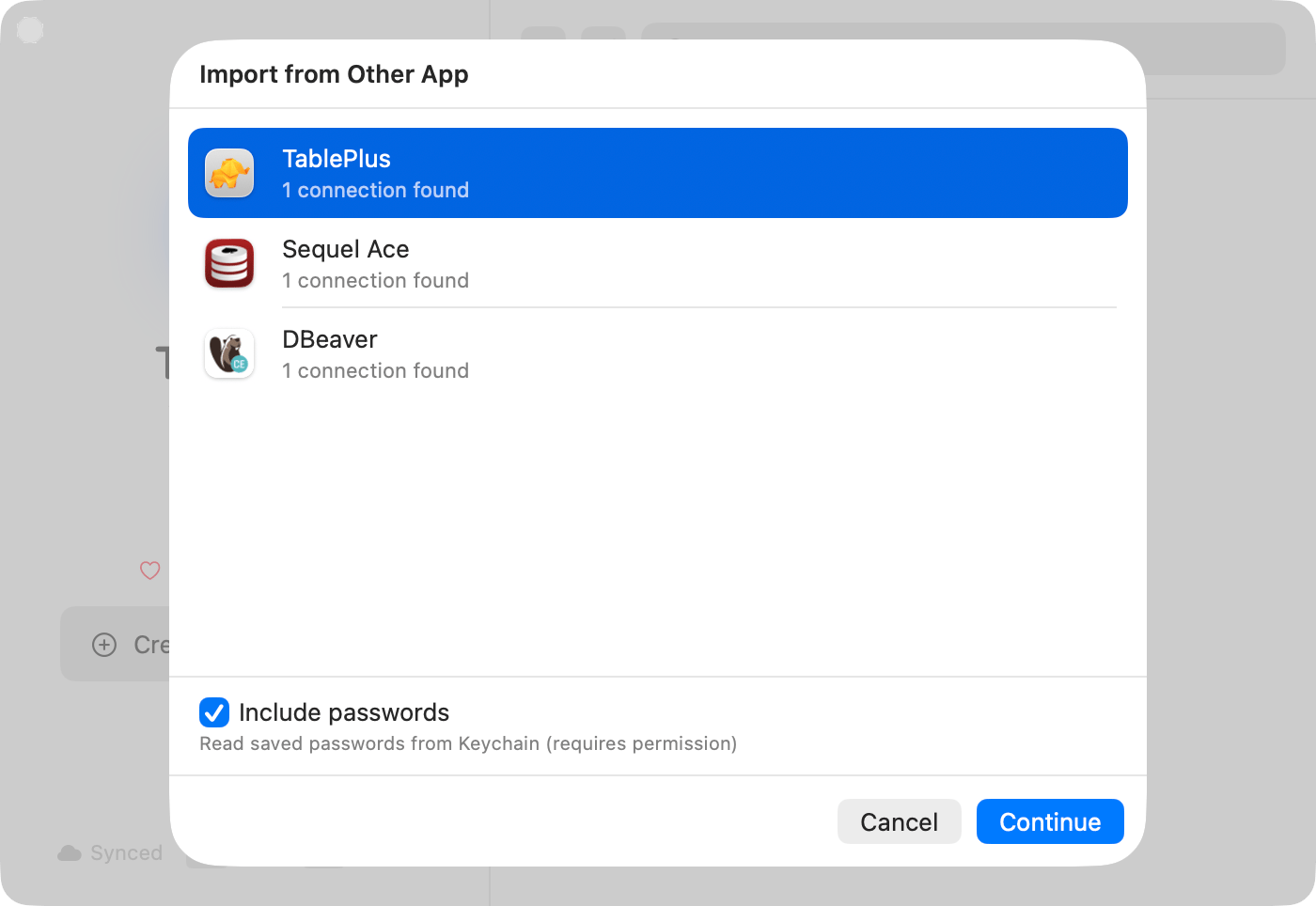
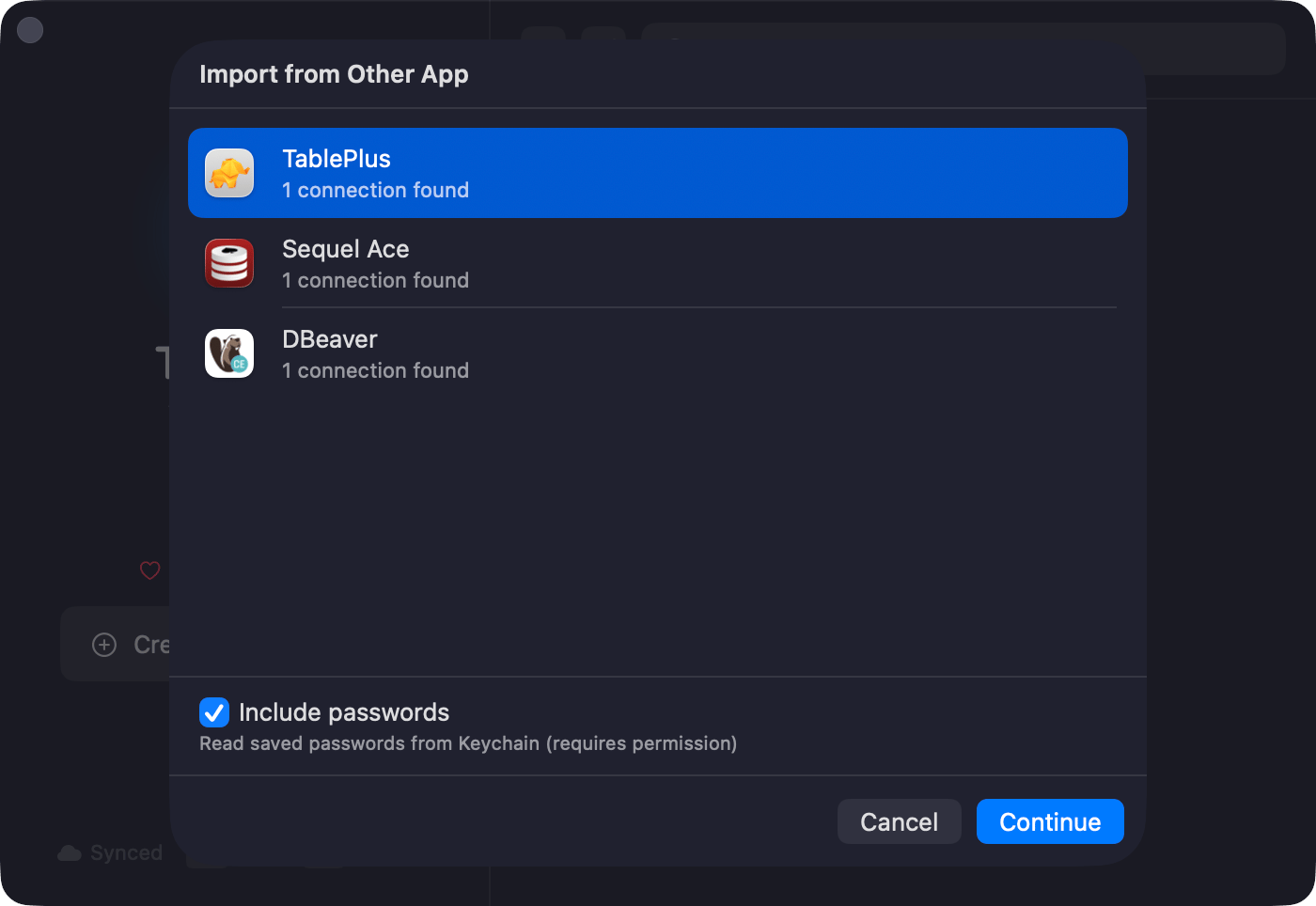
Pick the client you're coming from
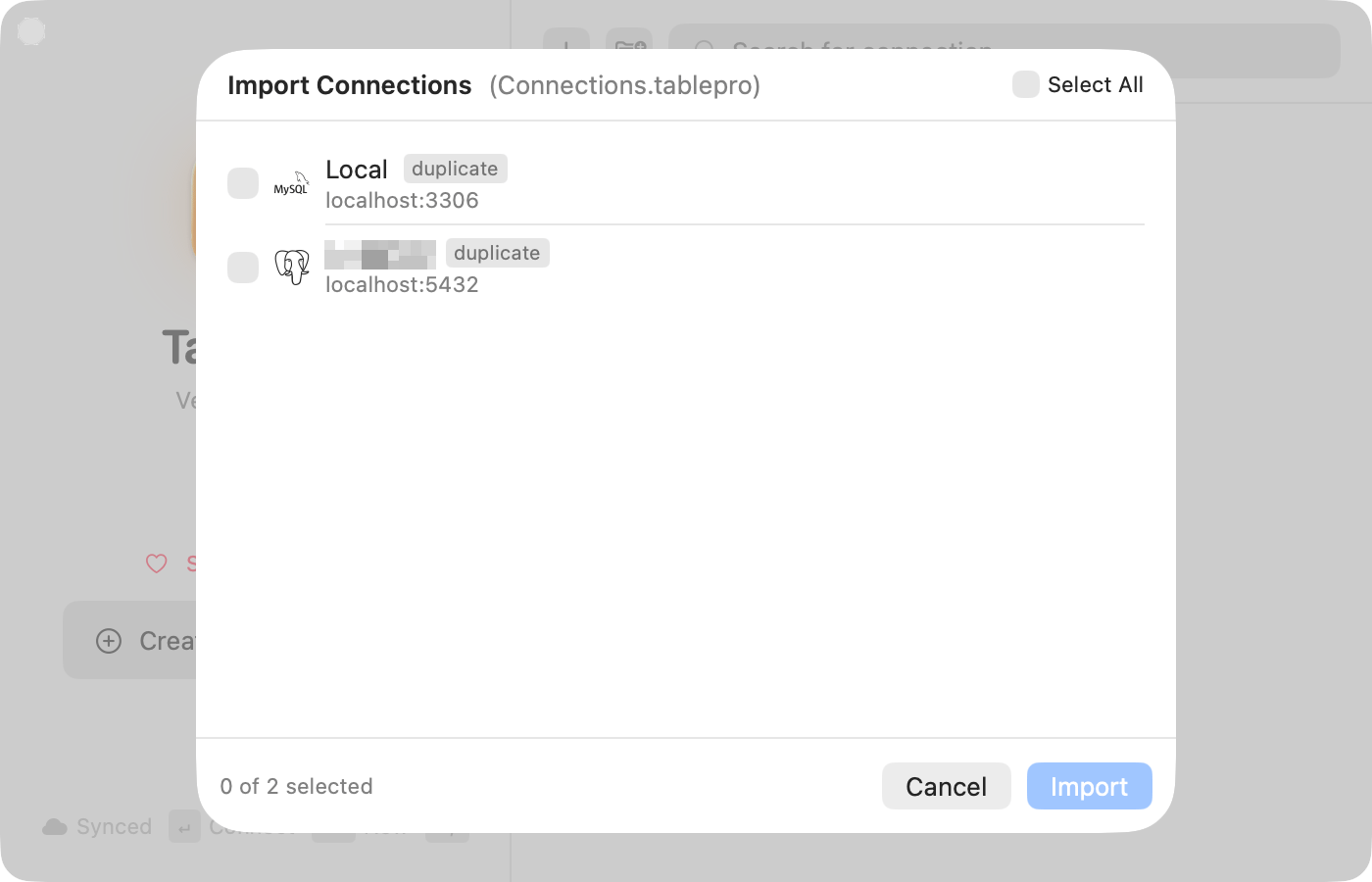
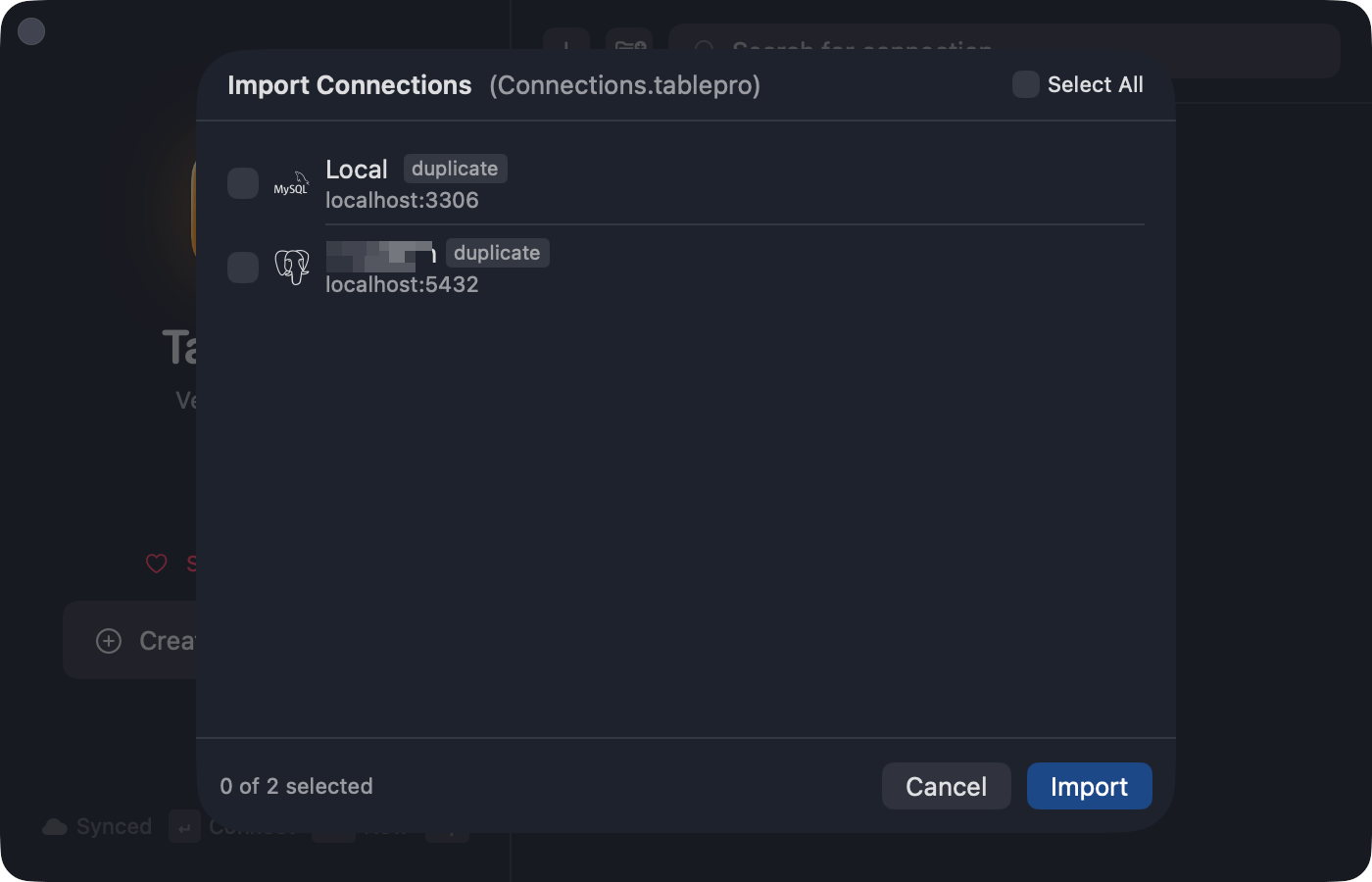
Review before anything is saved
SSH tunnel and SSL settings come across with the connection. See Connection Sharing for the full detail on each source.
About passwords
This is the part of any migration that goes wrong, so it is worth knowing which case you are in before you start. Passwords in a file. DBeaver, Beekeeper Studio and Navicat keep credentials in their own encrypted store. TablePro decrypts it and the import runs start to finish with nothing to click. Passwords in the macOS Keychain. TablePlus, Sequel Ace and DataGrip store each password as a separate Keychain item, and macOS asks permission per item. On a large connection list that is a lot of prompts. Choose Always Allow rather than Allow and the run finishes without asking again. A DataGrip project protected by a master password cannot be read at all. Import those connections and set their passwords in TablePro.What does not come across
Be aware of these before you delete the old app.Getting your shortcuts back
TablePro follows macOS conventions, so a good number of chords already match whatever you were using:Cmd+N, Cmd+W, Cmd+S, Cmd+O, Cmd+Q, Cmd+F, and Cmd+Enter to run a query.
Where yours differ, rebind them in Settings > Keyboard (Cmd+,). Record the chord you are used to and TablePro warns you if something else already claims it.


Settings > Keyboard, where every rebindable shortcut lives
A few cannot be reassigned, so it is better to learn them than to fight them: editor built-ins such as
Cmd+/ for comment, Cmd+[ and Cmd+] for indent, tab selection Cmd+1 through Cmd+9, text size Cmd+= and Cmd+-, and Cmd+F for find. The recorder tells you when you hit one.
If you use Vim bindings, turn on Vim Mode in Settings > Editor and most of this section stops mattering.
The full list is in Keyboard Shortcuts.
Coming from a client TablePro cannot import
Two other routes exist. A connection URL. Add from Existing > Import from URL takes apostgres://, mysql:// or similar URL and fills in the form. Fastest path when you only have a handful of connections.
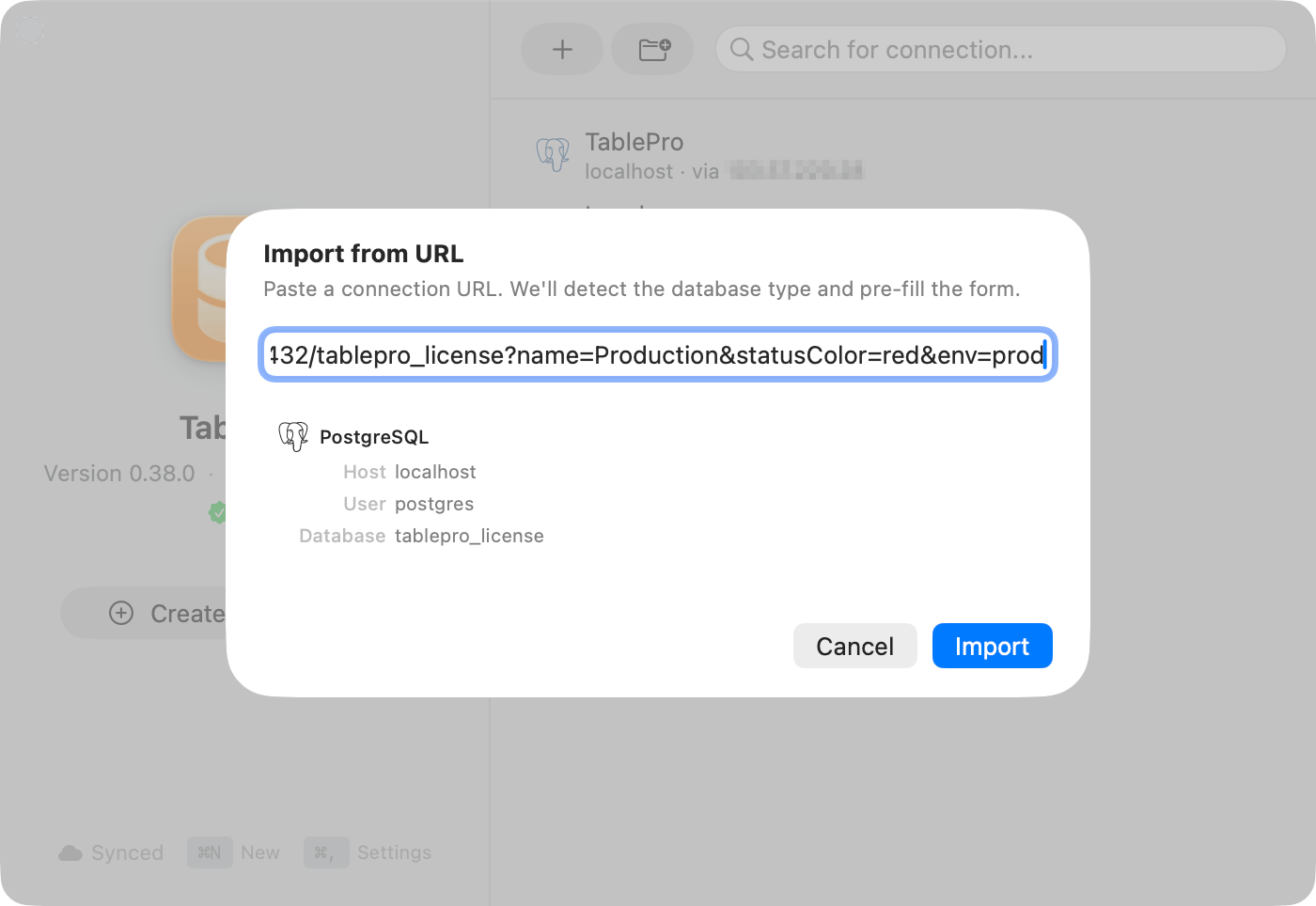
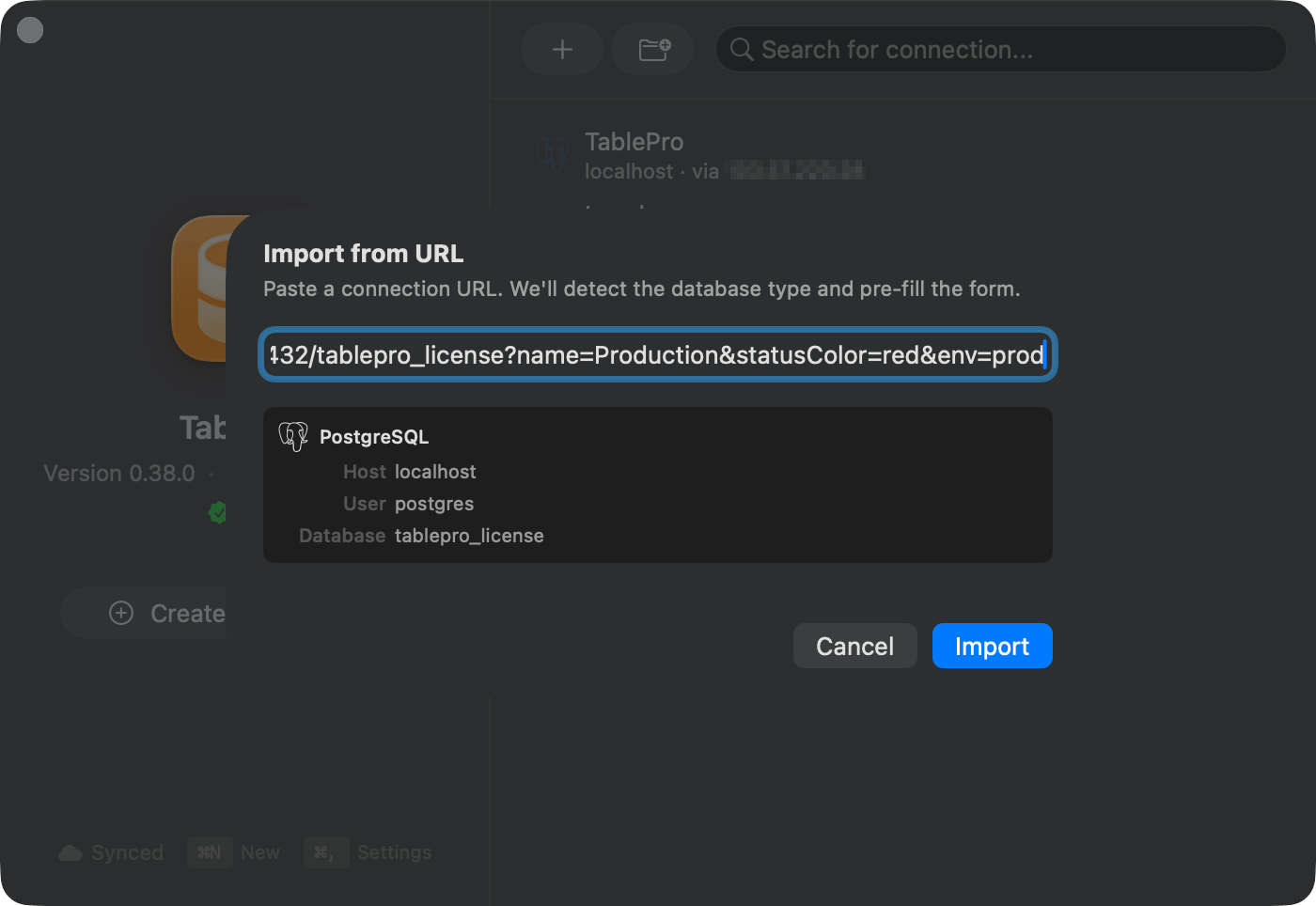
Import from URL
.env, docker-compose.yml or framework config becomes a connection without you typing a host.
If your database is not supported yet
TablePro ships 14 drivers inside the app and installs 17 more from the plugin registry on demand, so a database missing from the connection form may still be one click away in Settings > Plugins > Browse.

Settings > Plugins > Browse